
Reviewed · AKROTIRI ARCHAEOLOGICAL SITE TOURS
Santorini , Akrotiri tour by a licensed guide
Akrotiri turns ruins into real daily life. You’ll walk a well-preserved Bronze Age settlement buried by a volcanic eruption, then hear how researchers read the city’s daily rhythms from walls, rooms, and drainage. I especially like the way the licensed guide connects the site to the society that lived there, and how you get specific details like multi-storey layouts, kitchen and toilet remains, and the drainage system. One thing to keep in mind: it’s a short visit (about 1 hour 15 minutes), and the main site visit needs the separate Akrotiri entrance ticket.
In This Review
- Key Highlights I’d Prioritize
- Why Akrotiri Feels Like a Time Machine
- Stepping Into the Prehistoric City at Akrotiri
- The Volcano Story: From Living Town to Buried Pompeii
- What You’ll Actually See: Buildings, Rooms, and Built Life
- Frescoes and the Culture Behind the Walls
- Urban Plumbing: The Drainage System You Might Not Expect
- Tour Logistics: Duration, Price, and What’s Included
- Price and value
- What’s included
- What’s not included
- Who This Tour Suits Best (And Who Might Skip It)
- How to Get the Most Out of Your Time at Akrotiri
- Should You Book This Akrotiri Licensed Guide Tour?
- FAQ
- How long is the Santorini Akrotiri tour?
- Is the Akrotiri entrance fee included in the tour price?
- What is the tour price?
- Is this tour private?
- What ticket format do I get?
- Where does the tour start?
- Where does the tour end?
- What are the available visiting hours?
- Is cancellation free?
Key Highlights I’d Prioritize
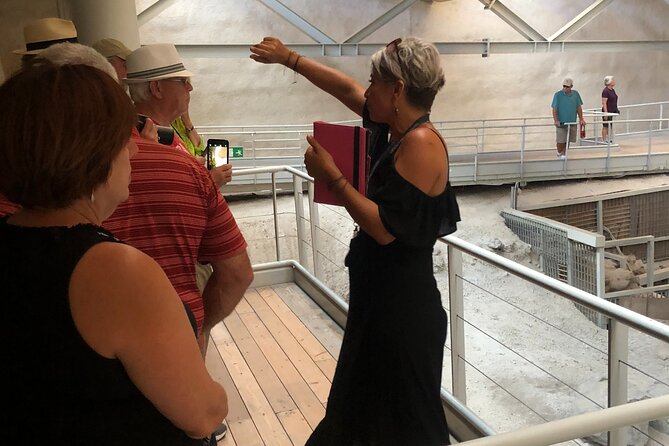
- Licensed, private guiding that keeps the ruins from feeling like random stones
- One of the best-preserved Bronze Age cities, showing tight urban planning
- Kitchen and toilet remains that hint at everyday routines
- Drainage and built infrastructure, including how water was handled
- Fresco talk and society context, so you understand what the town looked like before eruption
- Short duration that fits easily into a Santorini day
Other visits to the buried town at Akrotiri:
Why Akrotiri Feels Like a Time Machine
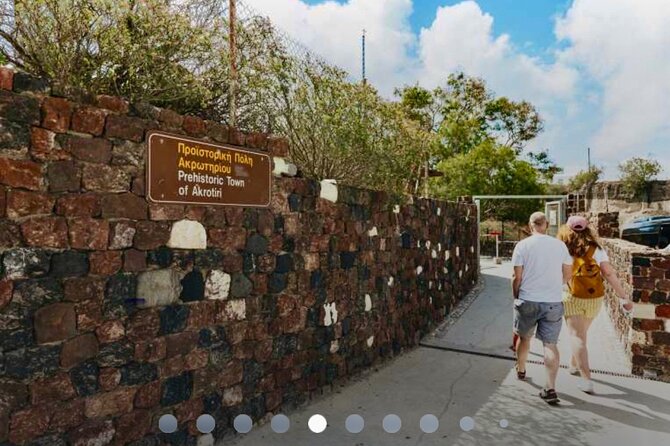
Santorini’s story is usually told in views, sunsets, and villages on the caldera. Akrotiri tells a different story. This site lets you see a prehistoric town that was buried by volcanic ash after a major eruption around 1600 BC, preserving buildings in a way that makes the past feel startlingly close.
What makes this tour work is not just the age of the site. It’s the way a guide can translate what you see into what it likely meant. The result is you leave with a mental picture of how people organized streets, stacked homes, and managed basic needs like sanitation and water flow.
I also like the pacing for this particular experience. It’s short enough that you do not get “ruin fatigue.” You cover the core parts of the archaeological area without turning your day into a long slog in the sun.
Stepping Into the Prehistoric City at Akrotiri
Your focus is the Akrotiri Archaeological Site, a Bronze Age settlement uncovered through excavation. After the eruption, the town stayed buried under volcanic material for nearly 4,000 years. That long burial is part of why archaeologists can still interpret so much of the built environment today.
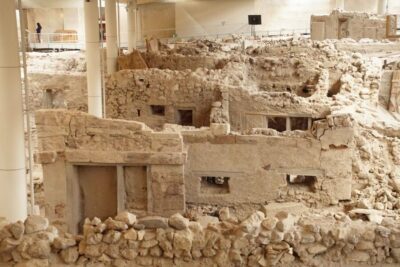
A big win here is the sense of dense urban planning. You are not looking at a few scattered walls. You’re seeing a settlement laid out with buildings packed close together, including two- and three-storeyed structures. Standing near a multi-level building footprint helps you grasp how ordinary daily life could happen vertically, not just horizontally.
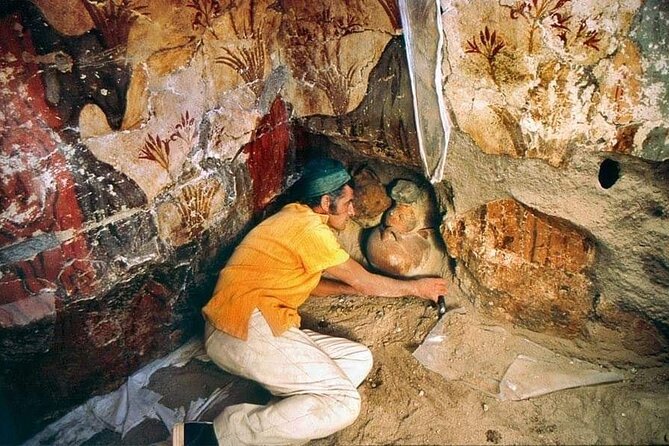
There’s also a fascinating origin story for modern discovery. The site came to light during work to obtain volcanic soil from Santorini, used for building and insulating the Suez Canal. That detail matters because it explains why the excavation unfolded at all, and why so much had already been protected under ash.
The Volcano Story: From Living Town to Buried Pompeii
Akrotiri is often compared in spirit to Pompeii because the eruption acted like a protective blanket. After the volcano event, the town remained entombed under ash and debris, which helped preserve structures long enough for modern archaeology to piece together the settlement’s layout and function.
When you hear the eruption timeline and the “buried for centuries” explanation, the site becomes less abstract. You start to notice patterns in building placement, and you understand why the archaeological record feels so detailed compared with many ancient sites.
I find it helpful to watch for cause-and-effect as you move through the area. If a town was sealed quickly and buried deeply, that can affect what survives, how visible rooms are, and why certain features appear where they do. A guide’s job is to connect those dots so you’re not just staring at walls.
A few more ways to fill a day on Santorini
- From Heraklion/Crete: Santorini Island Guided Day Trip★ 4.4 · 1,448 reviews
- Santorini: Island Highlights Guided Day Trip with Oia Sunset★ 4.4 · 713 reviews
- Santorini: Guided Tour to 3 Wineries with Wine Tastings★ 4.8 · 693 reviews
- Santorini: Thirassia Islands and Volcano Guided Cruise★ 4.4 · 650 reviews
- Santorini Luxury Custom Private Tour with Local guide★ 5.0 · 623 reviews
What You’ll Actually See: Buildings, Rooms, and Built Life
The heart of the tour is walking the archaeological remains that show how Akrotiri worked as a town. Even though you are outdoors among excavated foundations, the site preserves enough detail to describe specific types of spaces.
You can expect to see remains of kitchen and toilet facilities. That’s a rare kind of “real life” information in ruins. It shifts the experience from monument viewing to daily living. When you think about where food preparation and sanitation likely happened, you also start to imagine how the family units functioned and how buildings supported routine.
You’ll also see evidence of strong construction and planning. The ruins include 2 and 3 storeyed buildings, and that vertical density points to housing and storage systems that had to work in close quarters.
One practical consideration: this is a site visit centered on a walk through an archaeological area. Even when the tour duration is short, you should assume you’ll be on your feet and looking closely at uneven ground. If you prefer long rests or lots of indoor time, this might feel more active than you expect.
Frescoes and the Culture Behind the Walls
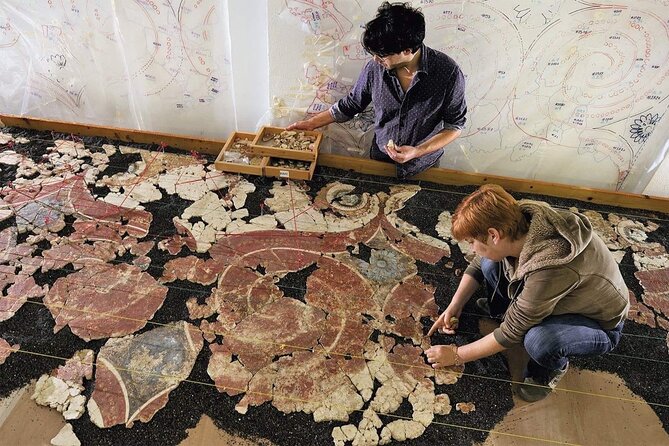
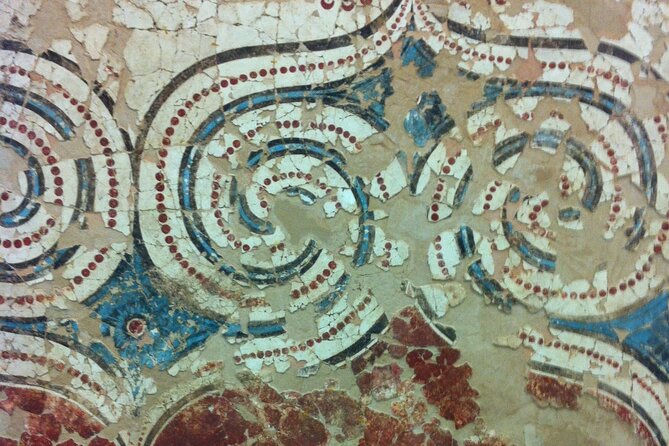
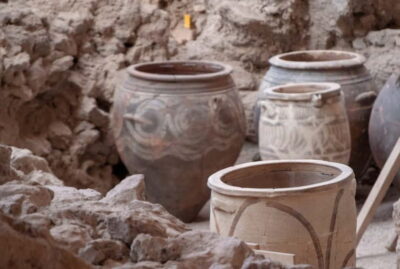
One of the most compelling pieces of the story is what likely once decorated the buildings. The tour includes discussion of vivid frescoes that once graced the walls. Even when you cannot see the original paintings in their full presence, hearing what frescoes represented helps you interpret the site as a cultural space, not just an emergency burial.
The guide also explains how inhabitants likely organized their society and culture. This is where a licensed professional really matters. Without context, you might only register layout and materials. With context, the ruins become a snapshot of taste, status, and community life.
A good sign is how the guide connects new theory and ongoing interpretations. Based on past tour feedback, strong guides answer questions and update you on current ideas about what the ruins show. That interaction is what turns a short walk into something you remember.
Urban Plumbing: The Drainage System You Might Not Expect
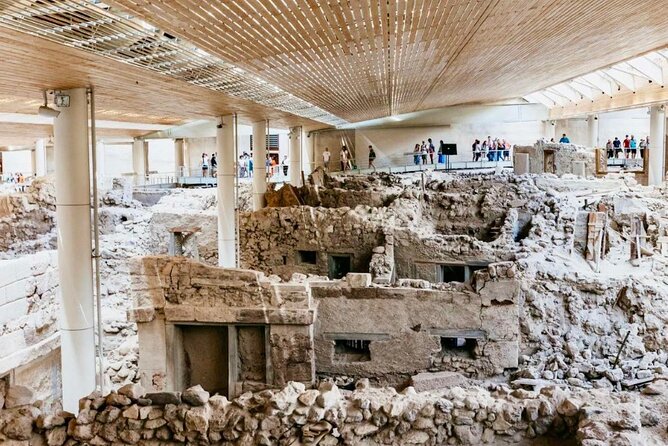
Akrotiri’s infrastructure is a major reason people get excited about this site. The remains include what’s described as a perfect drainage system. That might sound like a detail only engineers care about, but it’s actually a window into how seriously the town managed everyday conditions.
Sanitation and water handling are not glamorous topics, but they’re essential for any settlement. When a town invests in drainage, it suggests planning, maintenance, and a coordinated approach to living in tight spaces.
This is also a key reason to do a guided visit rather than just buying an entrance ticket and walking solo. A guide can help you notice features that might otherwise look like “stone bits,” and it explains why the system matters to the settlement’s survival and health.
Tour Logistics: Duration, Price, and What’s Included
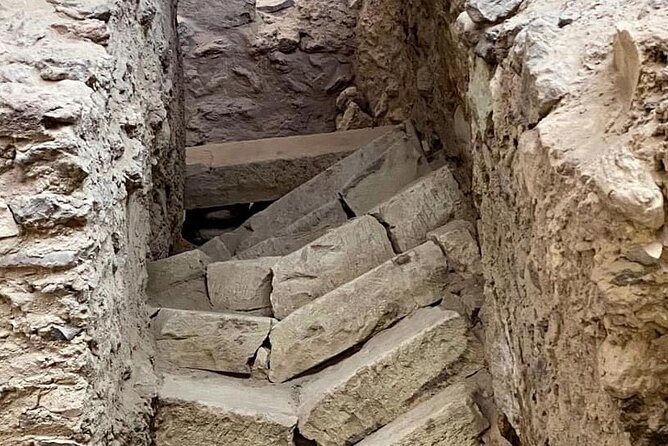
This is a private tour for your group, built around a single main stop at Akrotiri. Duration is approximately 1 hour 15 minutes, and you receive a mobile ticket. The meeting point and end point both refer you back to the same area, so you are not committing to a complicated hop between multiple sites.
Price and value
The price is $213 per group, with a group size up to 10. Entrance is not included. The separate Akrotiri entrance fee is listed at 12 euro per person.
Is it worth it? For value, the best case is when your group can actually fill the private group size. If you have several people traveling together, the cost per person drops quickly. Even for smaller groups, paying a single guide fee can still be a smart move if you want answers on the spot instead of trying to self-interpret every feature.
Where you should adjust your expectations is the entrance fee. You’re not getting “all-in” pricing, so budget for the site ticket in addition to the tour cost.
What’s included
You get a tour by a licensed tourist guide.
What’s not included
The Akrotiri entrance fee, 12 euro per person.
Who This Tour Suits Best (And Who Might Skip It)
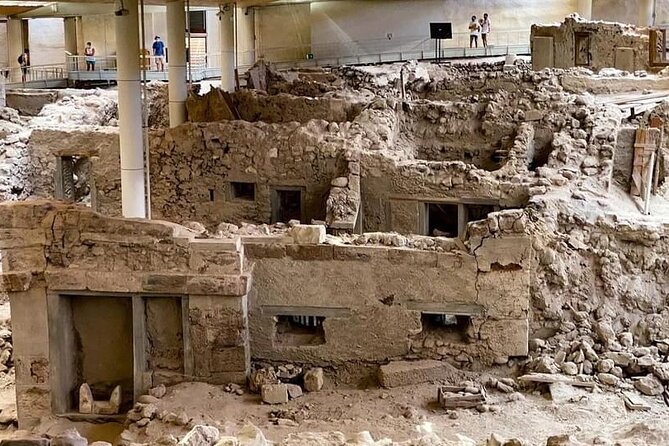
I think this tour is a great fit if you like archaeology, want a quick focused experience, and prefer guided context that turns ruins into a story. It also suits families, since the length is manageable and the guide can paint a clear picture of daily life.
It’s especially good if you want more than a photo stop. The whole point here is understanding how the city worked and why it was preserved, from eruption burial to what archaeologists infer about kitchens, toilets, and drainage.
If you’re the kind of traveler who wants long, independent wandering, you might find 1 hour 15 minutes too short. You also might not care as much about the scientific and cultural explanations. In that case, a self-guided visit could feel simpler.
How to Get the Most Out of Your Time at Akrotiri
Since the tour is short, your best strategy is mental preparation. Before you go, decide what you want most: the prehistoric daily-life details, the volcano preservation story, or the urban planning and infrastructure.
During the walk, ask questions on the things you naturally notice. For example:
- the multi-storey building layout
- the areas tied to kitchen and toilet remains
- the drainage system and what it suggests
Based on feedback from past tours, a strong guide will answer questions and bring you up to date on current theory. If that matters to you, show up ready to interact.
Also, give yourself a little space to look up. Even with excavated remains, it’s easy to get stuck staring at stone edges. A quick glance around helps you imagine how the town would have fit into its surroundings.
Should You Book This Akrotiri Licensed Guide Tour?
If you want a structured, guided introduction to one of Santorini’s most important prehistoric sites, this booking makes sense. The price works best when you’re traveling as a group, and the short duration helps you avoid turning Akrotiri into a full-day commitment.
I’d book it if you care about explanations that connect what’s visible to how people lived, including sanitation, drainage, and daily routines. A licensed guide is the difference between viewing ruins and understanding a town.
I would hesitate if you expect a long, self-paced stroll or if you dislike walking in an outdoor archaeological setting. In that case, you may prefer a different format or an entirely self-guided visit.
FAQ
How long is the Santorini Akrotiri tour?
The tour lasts about 1 hour 15 minutes.
Is the Akrotiri entrance fee included in the tour price?
No. The entrance fee is 12 euro per person and is not included.
What is the tour price?
It is $213 per group, up to 10 people.
Is this tour private?
Yes. It is a private tour/activity, and only your group participates.
What ticket format do I get?
You receive a mobile ticket.
Where does the tour start?
It starts at the listed meeting point: 8G879C22+6QV9C22+6QV Santorini, Greece.
Where does the tour end?
The activity ends back at the meeting point.
What are the available visiting hours?
Monday to Sunday, 8:30 AM to 3:30 PM.
Is cancellation free?
Yes, you can cancel up to 24 hours in advance for a full refund.
Newest around the caldera
- Island Tour Daytime with Winery visit & Wine Tasting Lunch
★ 5.0 · 1 review - Sanotini Oia Wine Tasting and Local Places Half Day Tour
★ 5.0 · 1 review - Flying dress Santorini
★ 5.0 · 1 review - GROUP FLYING DRESS PHOTOSHOOT in Santorini
★ 5.0 · 1 review - Private Wine Tour on Santorini Local Wines and Sunset Views
★ 5.0 · 1 review - Santorini Private 8 hours Sightseeing Tour
★ 3.0 · 1 review - Santorini: The Perfect 6-Hour Highlight Island Tour!
★ 5.0 · 1 review - Santorini organised day tour 5 hour
★ 3.0 · 1 review
Akrotiri Archaeological Site Tours, compared.
Akrotiri Ticket with Optional Self-Guided Audios
Read our review →
Archaeological Bus Tour To Akrotiri Excavations & Red Beach
Read our review →
Experience Akrotiri with a Licensed Tour Guide
Read our review →Archaeological Bus Tour to Akrotiri Excavations & Red Beach
Read our review →
Private Cultural Villages Sightseeing & Akrotiri Excavations
Read our review →
Private Tour: Ancient Akrotiri and Santorini Wineries Tour
Read our review →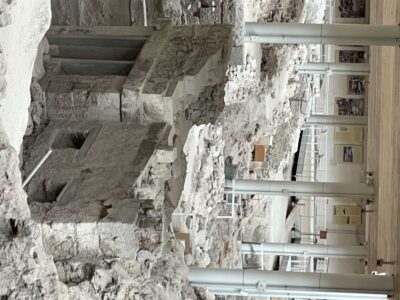
Akrotiri Private Guided Tour with Hotel Pick-Up
Read our review →Browse the lists this tour appears in