Reviewed · WORKSHOPS
Santorini: 2-Day Guided Windsurfing Lesson
Wind meets coaching in Santorini.
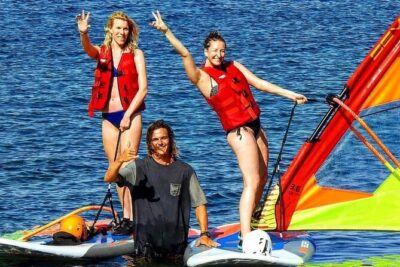
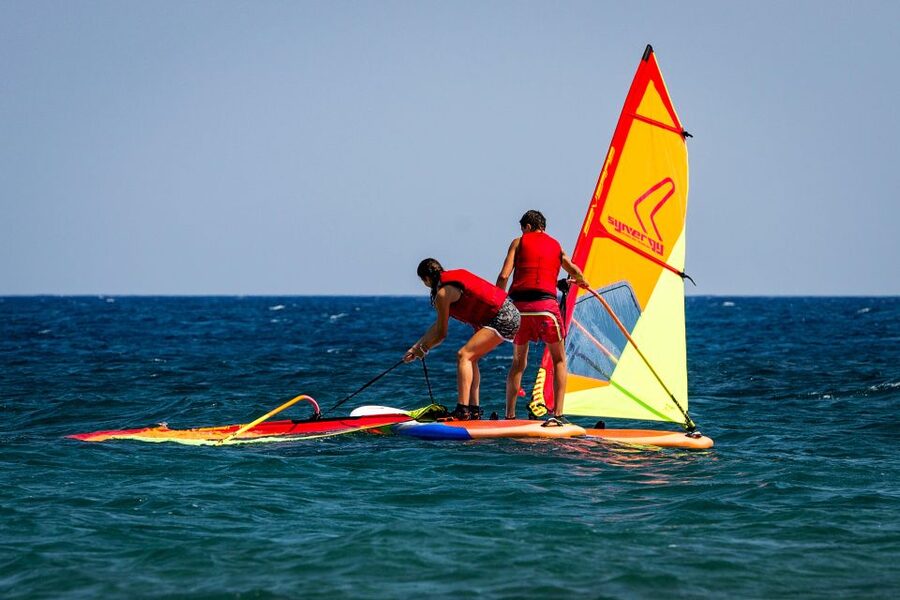
This 2-day, 5-hour windsurfing taste in South Aegean, Greece helps you learn step by step with VDWS certified instructors, plus you get time on the water right away. I especially liked the small group limit of 6, which means you are not just drifting around waiting for attention.
The second thing I really liked: the team brings safety gear and a rescue boat setup so you can focus on learning instead of worrying. One possible drawback is that windsurfing uses muscles fast, and after day one someone I talked to had sore muscles, so plan your schedule and expect you may need a recovery day.
In This Review
- Key highlights worth planning around
- Santorini windsurfing, but make it learnable
- Price and what makes it feel fair at $141
- The setup you should expect before you ever sail
- Day 1: building control, then earning your first real confidence
- Day 2: where you start to feel independent on the water
- The coaching style that helps beginners stop freezing
- Starboard and Severne gear: why the board and sail matter
- Safety details you should take seriously, even if you feel brave
- What to bring (and what to skip) so you do not derail the lesson
- Who this 2-day beginner lesson is really for
- How to make the most of your 5 hours on the water
- Should you book this Santorini windsurfing lesson?
- FAQ
- How long is the windsurfing lesson?
- Is the lesson guided?
- What language is the instruction offered in?
- How big is the group?
- What equipment is included?
- Will there be safety support during the lesson?
- Are food and drinks included?
- Where does this take place?
- Is the experience wheelchair accessible?
- Is cancellation free, and can I pay later?
Key highlights worth planning around
- VDWS certified instruction: You are coached by instructors trained for windsurfing fundamentals, not just casual guidance.
- Starboard boards and Severne sails: You practice on current, performance-minded equipment.
- Small group size up to 6: More hands-on feedback, fewer people competing for the instructor’s attention.
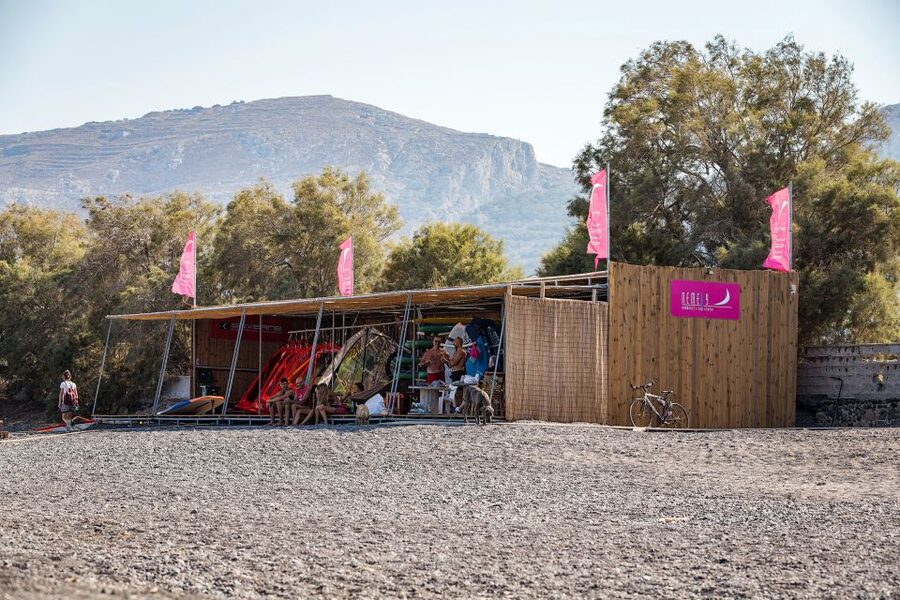
- Safety built into the session: Lycra tops, shoes, helmets, life vests, and a rescue boat ready at the center.
- Real learning progress over two days: The goal is confident, independent sailing by the end, not a one-time demo.
A few more ways to fill a day on Santorini
Santorini windsurfing, but make it learnable
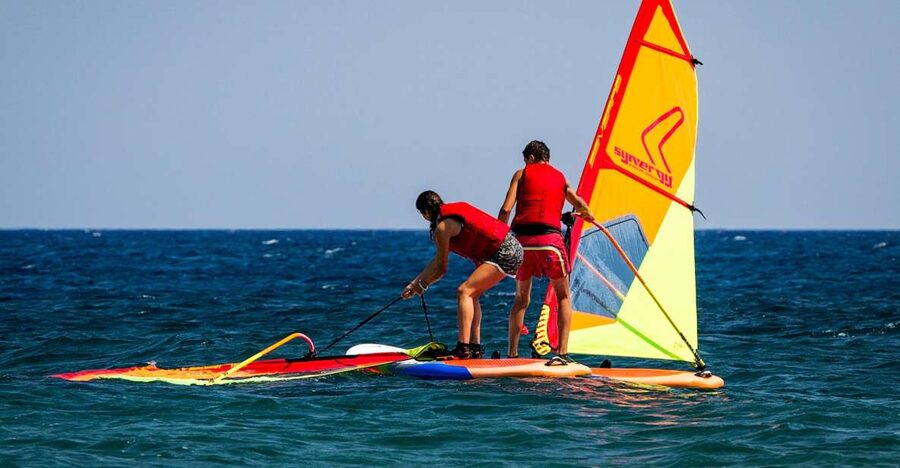
Santorini wind can feel like a party trick at first. One minute you are watching sails in the distance, the next minute you are out there trying to make the board behave while the wind does its own thing. That sounds intimidating, but the real win here is that the lesson is structured to reduce chaos and build control.
You get a step-by-step path through the basics across two days. The idea is simple: you learn the “why” behind the moves, then you apply them in the water while an instructor watches for the exact moments you get off balance or lose traction.
I also love that this is not sold as an all-day beach hang. It is a focused session timed for learning. It is also small-group paced, so beginners can ask questions and keep moving forward at a rate that feels realistic.
Price and what makes it feel fair at $141
At $141 per person for 5 hours total, you are not just paying for gear and ocean time. You are paying for instructor time, equipment setup, and guided practice in a controlled learning environment.
That value matters because windsurfing is not like snorkeling. You need feedback when your stance is off, when your sail power is wrong for the wind, or when you are fighting fear. This format gives you those coaching moments repeatedly, and the small group means the instructor can actually correct you.
Another value point: equipment and the instructor are included. You also get the safety kit, including helmets, life vests, lycra tops, and shoes. That cuts down on what you need to bring and what you need to figure out when you arrive.
What is not included is food and drinks. That is not a dealbreaker, but it is a real planning item, especially if you are out on the water longer than you expected or you are the type who gets cranky when hungry.
The setup you should expect before you ever sail
Even if you come with zero experience, you should expect a clear starting point. The lesson is designed as a true basics introduction, with step-by-step guidance and repeated practice time in the water.
On the safety side, you are not thrown in without prep. You will use the center’s gear, including protective clothing and flotation. And importantly, a rescue boat is always prepared at the center if help is required.
On the instruction side, you are working with instructors who can explain things in plain language. In one beginner experience, the instructor, Harry, broke down concepts so they were easy to understand and then easy to apply. The difference you feel as a student is that you stop guessing and start using clear cues.
Same caldera, a different way to spend the afternoon:
- Santorini: Volcanic Islands Cruise with Hot Springs Visit★ 4.4 · 10,869 reviews
- Santorini: Catamaran Tour with BBQ Dinner, Drinks, and Music★ 4.6 · 5,886 reviews
- Premium Small-Group Catamaran Cruise with BBQ, Open Bar, Transfer★ 5.0 · 4,209 reviews
- Santorini Classic Catamaran Cruise with BBQ, Drinks and Transfers★ 5.0 · 3,933 reviews
- Santorini: Luxury Catamaran Day Trip with Meal and Open Bar★ 4.8 · 3,678 reviews
Day 1: building control, then earning your first real confidence
Day one is about turning windsurfing from a scary word into a set of manageable tasks. The best part of this style of course is that you practice the building blocks before you try to sail like you own the ocean.
Here is what you should mentally plan for on day one:
- learning body positions that keep you stable when the sail pulls
- learning how to manage the sail so it supports you instead of overpowering you
- getting used to the feeling of being on the water with equipment attached
Expect the instructor to watch closely and give you corrections. That is where people tend to progress fast, because small adjustments in stance and sail handling make a big difference once you are actually moving.
In a real beginner story, the student started with worry about the ocean. With patient, supportive coaching, that fear shifted into something like curiosity. The win was not that the instructor was loud or forceful, it was that the feedback helped the student take the next step without feeling pushed past comfort.
Also note the pacing: you get time to practice, not just a short demo. The lesson includes multiple moments of water time within the 5 hours total spread over 2 days, so day one is not a full stop. It sets you up for better control day two.
Day 2: where you start to feel independent on the water
If day one is “learn and survive the new sensations,” day two is “use what you learned.” The goal stated for the end of the course is sailing freely with confidence. That is a strong claim, but the structure supports it: you get coaching, you get repetition, and you get a chance to improve based on what you struggled with day one.
Day two usually feels like a different sport. You know what you were doing wrong before, so your focus becomes refinement. You can also anticipate what the instructor will ask you to try next, because they provide a realistic look at what the wind and conditions will allow.
In one case, Harry gave a weather and plan outlook before each next session and also explained how the student was performing. That combination matters. If you know what to expect, you stop wasting energy on guesswork and you start using attention where it counts.
Even if you do not hit perfect control on day two, you should leave with a clearer map of how windsurfing works. That is the real confidence. You understand how sail power and balance connect, and you know what to practice next if you return.
The coaching style that helps beginners stop freezing
Let’s talk about the human part, because windsurfing is as much about trust as technique. Two coaching traits show up strongly in the experiences shared by students.
First is patience. A student described the coaching as very patient and supportive, making it possible to overcome fear of the ocean. In practical terms, patient coaching means you get corrections in a way you can absorb while your body is learning new movements. You are not just told to do something, you are guided toward it.
Second is realistic coaching, not wishful thinking. In one experience with Harry, the instructor gave a realistic outlook before each next session on the weather conditions and how the student was performing. That is gold for beginners. It helps you understand why you might practice one thing today instead of another, and it keeps you from blaming yourself for factors beyond your control.
And yes, flexibility matters too. The same student noted that the schedule could adjust because they could not do the two days back to back due to sore muscles after day one. The instructor stayed relaxed and flexible, which makes the whole learning experience less stressful.
Starboard and Severne gear: why the board and sail matter
You are using the latest equipment from Starboard and Severne. That detail is not just brand trivia. For learners, modern sails and boards tend to be easier to manage and more predictable when you are working at the fundamentals level.
What you likely notice as a beginner is stability and feedback. The board shape affects how quickly you find balance. The sail setup influences how the wind power shows up in your handling. When you practice multiple times in a course like this, the gear helps you repeat the right actions.
Also, using consistent gear throughout the lesson matters. You are not switching equipment in the middle of learning and wondering if your results are from technique or from changes in the setup. Consistency helps your progress feel logical.
Safety details you should take seriously, even if you feel brave
Windsurfing lessons work because safety is treated like part of instruction, not an afterthought. Here, you get multiple layers of support.
You will wear Lycra tops, shoes, helmets, and life vests. You will also have a rescue boat prepared at the center if it is required. That last detail matters because it tells you the center is ready for the real world, not the fantasy version where every student glides perfectly.
From a learning perspective, safety tools do two things. They reduce physical risk. And they reduce mental risk, so you spend more brainpower on technique. Less fear means fewer panic mistakes, and fewer panic mistakes means more meaningful practice.
What to bring (and what to skip) so you do not derail the lesson
Because equipment and the instructor are included, you do not need to hunt down windsurfing gear. But you should still prepare like you are doing a full outdoor activity.
Here’s what you should bring:
- water and something to eat before or after, since food and drinks are not included
- sun protection, because you are in open-air exposure while on the water
- a change of clothes for after you get wet, even if you think you will stay dry
- any personal items you use for comfort, but keep it simple
If you are prone to feeling cold after water time, pack for that too. Wind and spray can change how you feel, even on a day that looks warm from shore.
One more practical note from real beginner experience: plan for soreness. It can happen after day one, and being able to adjust the order or spacing of sessions helps a lot.
Who this 2-day beginner lesson is really for
This lesson is a great fit if you want more than a one-off try. You want coaching that breaks down windsurfing into parts, then connects those parts in the water.
It is also a strong choice if you prefer calm, supportive instruction. The experiences shared highlight patient coaching that helped beginners overcome fear and learn with confidence.
Because the group is limited to 6 participants, it is also a good option if you do not want to disappear into a large class. You are more likely to get specific feedback when the instructor is not juggling too many students.
It is listed as wheelchair accessible, which is a meaningful detail for anyone evaluating options based on mobility needs.
If you are an advanced windsurfer looking for extreme tricks, you may find this course more foundational than you expect. This is a basics lesson aimed at confident sailing, not performance progression.
How to make the most of your 5 hours on the water
Your mindset matters as much as your technique. Treat the course like a series of small experiments.
Before each water time, listen carefully to the instructor’s realistic expectations about conditions and what you will work on next. That approach keeps you from feeling blindsided if the wind shifts or if the day’s plan changes.
During practice, focus on one or two key cues at a time. Beginners often try to correct everything at once. That usually leads to confusion. When the instructor talks about what you are doing well and what needs adjusting, use that as your compass.
After each session, take mental notes on what made sailing feel easier. If the instructor mentions a problem pattern, watch for it the next time you rig and go out. That is how you speed up your progress.
Finally, pace your day. If you can, avoid stacking other intense activities right after day one. Your body is learning new movements, and windsurfing uses muscle groups that may not get much action in daily life.
Should you book this Santorini windsurfing lesson?
I think you should book this if you want a beginner-focused path to windsurfing with real coaching, not a vague introduction. The combination of VDWS certified instructors, small group size, modern Starboard and Severne gear, and real safety planning with a rescue boat makes the experience feel structured and trustworthy.
Skip it only if you know you cannot handle water-based learning at all right now. Also, if you hate scheduling around outdoor conditions, you might prefer a different kind of class where the plan does not depend on wind and sea behavior. But even then, the instructors provide a realistic outlook, and that kind of honest guidance is exactly what you want when you are learning.
If you are serious about learning windsurfing fundamentals in a supportive setting, this two-day lesson in Santorini is a strong choice.
FAQ
How long is the windsurfing lesson?
The total duration is 5 hours, spread over 2 days.
Is the lesson guided?
Yes. You get step-by-step guidance from instructors, with small-group coaching.
What language is the instruction offered in?
English.
How big is the group?
The group is limited to 6 participants.
What equipment is included?
Equipment and the instructor are included. You are also provided Lycra tops, shoes, helmets, and life vests.
Will there be safety support during the lesson?
Yes. A rescue boat is prepared at the center in case it is required.
Are food and drinks included?
No. Food and drinks are not included.
Where does this take place?
South Aegean, Greece.
Is the experience wheelchair accessible?
Yes, it is listed as wheelchair accessible.
Is cancellation free, and can I pay later?
Free cancellation is available up to 24 hours in advance for a full refund. There is also a reserve now, pay later option.
Newest around the caldera
- Island Tour Daytime with Winery visit & Wine Tasting Lunch
★ 5.0 · 1 review - Sanotini Oia Wine Tasting and Local Places Half Day Tour
★ 5.0 · 1 review - Flying dress Santorini
★ 5.0 · 1 review - GROUP FLYING DRESS PHOTOSHOOT in Santorini
★ 5.0 · 1 review - Private Wine Tour on Santorini Local Wines and Sunset Views
★ 5.0 · 1 review - Santorini Private 8 hours Sightseeing Tour
★ 3.0 · 1 review - Santorini: The Perfect 6-Hour Highlight Island Tour!
★ 5.0 · 1 review - Santorini organised day tour 5 hour
★ 3.0 · 1 review
Workshops, compared.
Greek Cuisine Cooking Class in Santorini with Recipes and Wine
Read our review →
Greek Cooking Class and Lunch with a Local Grandmother
Read our review →
Cooking Class in Traditional cave house in Santorini!
Read our review →
Santorini Family Farm Food & Wine Tour with Cooking Class
Read our review →
Private Santorini Cooking Class & Wine Tasting Tour
Read our review →